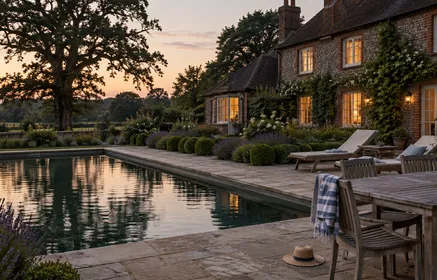
Both are beautiful, both last for generations. The right one depends on the colour of your house, the light in your garden and how the edge will be used.
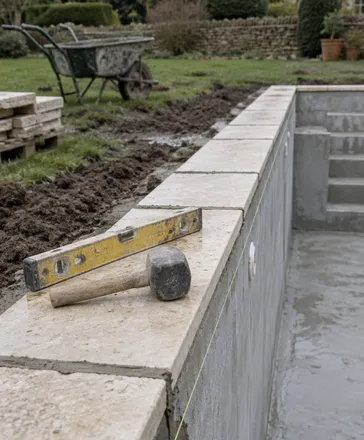
The coping is the stone edge around the top of the pool. It is the part you sit on, walk along and hold on to, and it frames the water from every window of the house. Nearly every client asks us to choose it for them, and nearly every time we bring two samples to the garden and lay them side by side on the lawn.
Purbeck: warm and local
Purbeck limestone comes from quarries a short drive west of us in Dorset. It is a warm, creamy grey with tiny fossil shells in it, and it weathers gently to a soft silver. It sits beautifully beside brick, flint and thatch, which is why it suits so many New Forest houses. It is dense and hard-wearing, and with a sawn and lightly brushed finish it stays comfortable underfoot when wet.
York: cooler and more formal
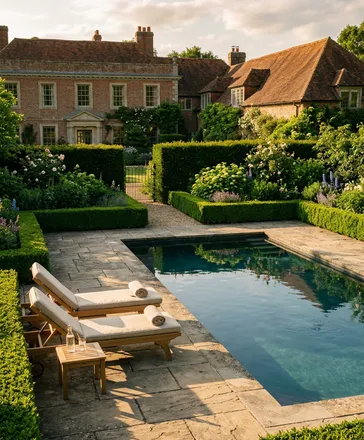
York stone is a sandstone from the Pennines. It is cooler in colour, with greys, buffs and the odd streak of rust, and it comes in larger slabs, so a long coping can be laid with very few joints. It looks right with stone and rendered houses and with more formal, architectural gardens. It is slightly softer than Purbeck and will darken a little under trees, which many people love.
“Lay the samples on the lawn and look at them from the kitchen window before you decide.”
Side by side
- Colour
- Purbeck warm grey, York cool grey and buff
- Suits
- Purbeck brick and flint, York stone and render
- Slab length
- Purbeck up to 1.2 m, York up to 2 m
- Cost
- Within 10% of each other